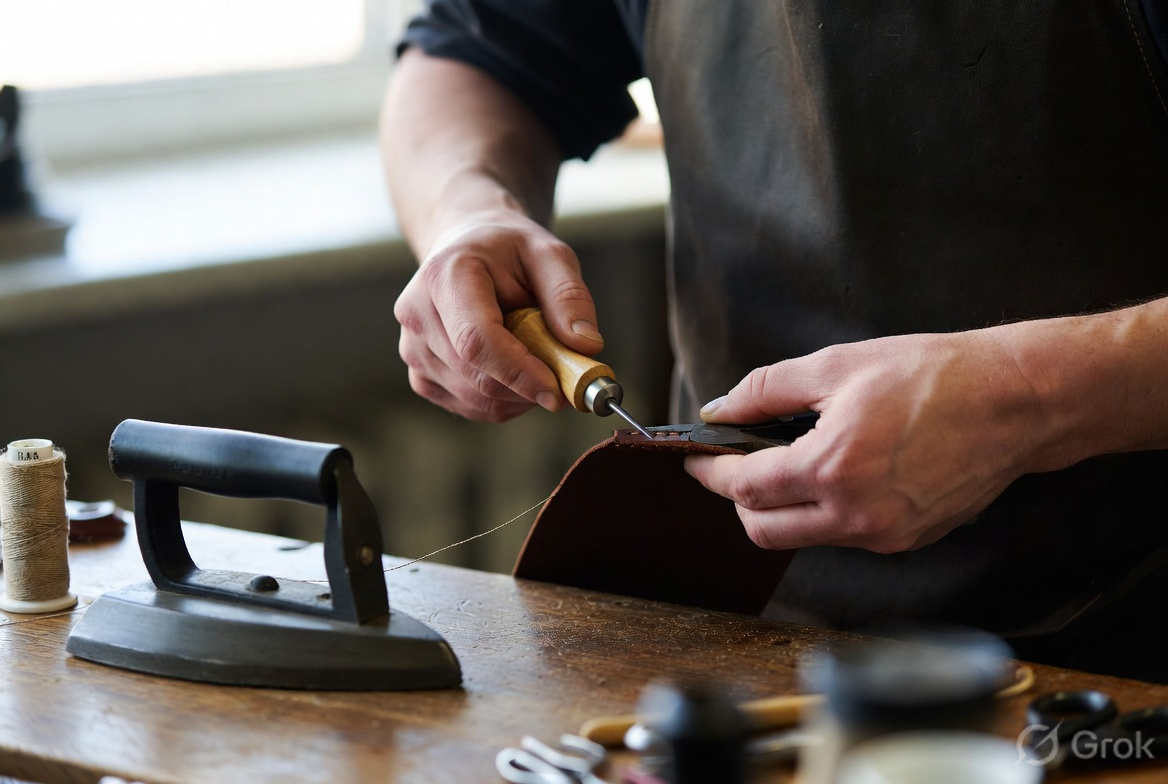
0.8mm linen thread is a popular choice for hand stitching leather goods, bookbinding, wallets, bags, saddlery, and heavy-duty crafts. Its natural strength, beautiful texture, and slight stretch make it excellent for saddle stitching, but it requires the right tools to create clean, professional holes and perfectly pressed seams.
Many crafters in India and globally ask: What is the best awl for 0.8mm linen thread? and Which iron works best when working with linen thread stitching?
Quick Recommendations:
- Best Awl: Vergez Blanchard round awl (or similar high-quality diamond/round pricking awl in 1-2mm blade width). For versatility, a premium stitching awl like those from Seiwa, Palosanto, or titanium-coated options.
- Best Iron: A reliable steam iron with strong steam output and precise temperature control (e.g., Rowenta, Reliable Velocity, or a heavy professional model). Use on linen setting (high heat) with a pressing cloth.
In this detailed guide, we’ll cover why these tools matter for 0.8mm linen thread, specific recommendations, techniques, and tips tailored for Indian crafters working with linen or waxed linen thread.
Why 0.8mm Linen Thread Needs the Right Tools
0.8mm linen thread is medium-thick — ideal for medium-weight leather (roughly 2-4mm thick) or fabric projects. It provides strong, durable seams that age beautifully but can fray or resist if holes aren’t properly opened.
- Awl Role: Creates clean, consistent holes that allow the thread to pass smoothly without excessive friction or damage. Too small a hole causes thread breakage; too large leaves sloppy stitches.
- Iron/Pressing Role: Linen thread and stitched seams benefit from pressing to set stitches flat, reduce bulk, and give a professional finish. Proper pressing also helps waxed linen thread relax and settle into the leather.
Related: Check our guides on threads for crafting — Cotton vs Nylon Macrame Threads or Best Thread for Hand Embroidery for more on natural vs synthetic options.
Best Awl for Stitching with 0.8mm Linen Thread
For hand stitching (especially saddle stitch), a good stitching awl or pricking awl is essential. The blade should create holes that comfortably fit the 0.8mm thread plus needle (total passage often around 1-1.5mm effective width).
Top Recommendations:
- Vergez Blanchard Round Awl — Highly praised for smooth piercing and control. Available in multiple sizes; choose a blade that matches your stitch spacing (e.g., 1-2mm wide for 0.8mm thread). Excellent for linen as it opens fibers cleanly without tearing.
- Palosanto or Blanchard-style Awls — Traditional favorites for leatherworkers using linen thread. They provide precision and durability.
- Seiwa Leathercraft Tools — Reliable Japanese-made awls that pair well with 0.8mm threads.
- Titanium-coated or Premium Stitching Awls — Longer-lasting edge; great for frequent use. Some users love Rocky Mountain Leather Supply or similar heavy-duty options.
- Speedy Stitcher Sewing Awl — Best for quick repairs on canvas, leather, or thicker materials. It works well with waxed linen thread and includes needles for lock stitching.
Tips for Choosing Awl Size:
- For 0.8mm thread, aim for awl blades 1-2mm wide.
- Match to your stitch spacing: Closer stitches (6-8 SPI) need finer awls; wider spacing allows slightly larger blades.
- Diamond-shaped blades are common for straight lines; round awls reduce tearing in some leathers.
- Always use a stitching pony, clamp, or grooving tool for stability.
Pair the awl with John James harness needles size 002 (around 1mm thick) for 0.8mm thread — the needle should be similar or slightly thicker than the thread.
Pro tip: Wax your 0.8mm linen thread lightly for smoother passage through holes created by the awl.
Explore our Elastic Thread for Sewing Guide for related hand-stitching techniques.
Best Iron and Pressing Tools for Linen Thread Stitching
Pressing is crucial after stitching with linen thread. It sets the seam, flattens stitches, and gives a crisp, professional look — especially important for leather edges or fabric seams.
Recommended Irons:
- Reliable Velocity (or 240IR/270IR series) — Excellent steam output, heavy build, and override for continuous use. Great for setting seams without auto-shutoff interruptions.
- Rowenta Professional Steam Irons — Consistent heat, strong steam burst, and precise control. Popular among sewers for linen and heavy threads.
- LauraStar Lift or similar steam generator irons — Provide dry steam that penetrates well without excess moisture, ideal for delicate finishes.
- Heavy Vintage-style or Tailor Irons — Weight helps press seams flat effectively.
Key Features to Look For:
- High wattage (1800W+) for quick heating.
- Strong, consistent steam output.
- Accurate temperature control (linen setting is hot — around 200-230°C / Cotton-Linen setting).
- Auto-shutoff with override option for long sessions.
- Good soleplate (ceramic or stainless) that glides smoothly.
Additional Pressing Tools:
- Pressing Cloth (cotton or linen) — Prevents shine or marks on leather/fabric when using high heat.
- Tailor’s Ham or Sleeve Board — For curved seams.
- Wooden Clapper — Absorbs moisture and sets creases flat after steaming — highly recommended for linen work.
- Seam Roller — Quick pressing for straight seams without a full iron.
- Spray Bottle — Light misting helps linen respond better to pressing.
Pressing Technique for 0.8mm Linen Thread Projects:
- Stitch your seam using the awl-pierced holes.
- Press the seam open or to one side while slightly damp (for linen fabric) or using steam.
- Use a pressing cloth to avoid damaging the thread or material.
- Apply steam, then press with the iron for 3-5 seconds.
- Use a wooden clapper immediately after to lock in the flatness as it cools.
- For leather: Press gently on the flesh side or use low-moisture steam to avoid marks.
Linen thread benefits from pressing because it helps the natural fibers relax and the wax (if applied) distribute evenly.
For more on fabric care, see How to Identify High-Quality Sewing Thread.
Complete Workflow: Awl + Thread + Iron for Best Results
- Prepare your 0.8mm linen thread (wax if needed for glide).
- Use your chosen awl to create consistent holes at even spacing.
- Saddle stitch with matching needles (e.g., John James 002).
- After stitching, press the seam using a good steam iron + cloth + clapper.
- Finish edges as needed (edge paint or burnishing for leather).
This combination delivers strong, beautiful, long-lasting stitches.
Common Mistakes to Avoid
- Using an undersized awl → thread frays or breaks.
- Overheating without a pressing cloth → shine or damage to linen/leather.
- Skipping pressing → bulky, uneven seams.
- Not matching needle to thread size → poor stitch appearance.
Where to Buy Quality Tools and Thread in India
At Damodaram Enterprise, we supply high-quality threads (including linen-style and synthetic alternatives) suitable for hand stitching. While we specialize in nylon, polyester, macrame, and elastic threads, our range supports many crafting needs. For premium awls and irons, source from reputable leathercraft suppliers or online platforms, and pair with our durable threads for mixed projects.
Check related products:
- Why Damodaram Is the Best Thread Supplier in India
- Bulk Thread Supplier Guide
- How to Choose the Right Thread
FAQ
Q: Can I use a diamond awl with 0.8mm linen thread? A: Yes — many prefer diamond blades for clean slits in leather.
Q: What temperature for ironing stitched linen thread seams? A: Use the linen/cotton setting (high heat) with steam and a pressing cloth.
Q: Is 0.8mm linen thread good for beginners? A: It’s manageable with a good awl and practice. Start with waxed versions for easier handling.
Q: Do I need to wax linen thread? A: Lightly waxing improves glide through awl holes and protects the thread.
Final Thoughts
For stitching with 0.8mm linen thread, invest in a quality Vergez Blanchard or similar premium awl for precise holes and a reliable steam iron (like Reliable Velocity or Rowenta) with supporting tools like a pressing cloth and clapper for flawless finishing. These tools make the difference between amateur and professional results.
Ready to upgrade your stitching setup? Explore our premium threads and supplies at Damodaram.store — perfect companions for your hand-sewing projects.
Have questions about thread selection, awl techniques, or pressing linen-stitched items? Contact the Damodaram team — we’re here to help Indian crafters and manufacturers achieve the best results.
Stitch stronger. Press smarter. Craft with confidence.