What is a wrist thread for protection?
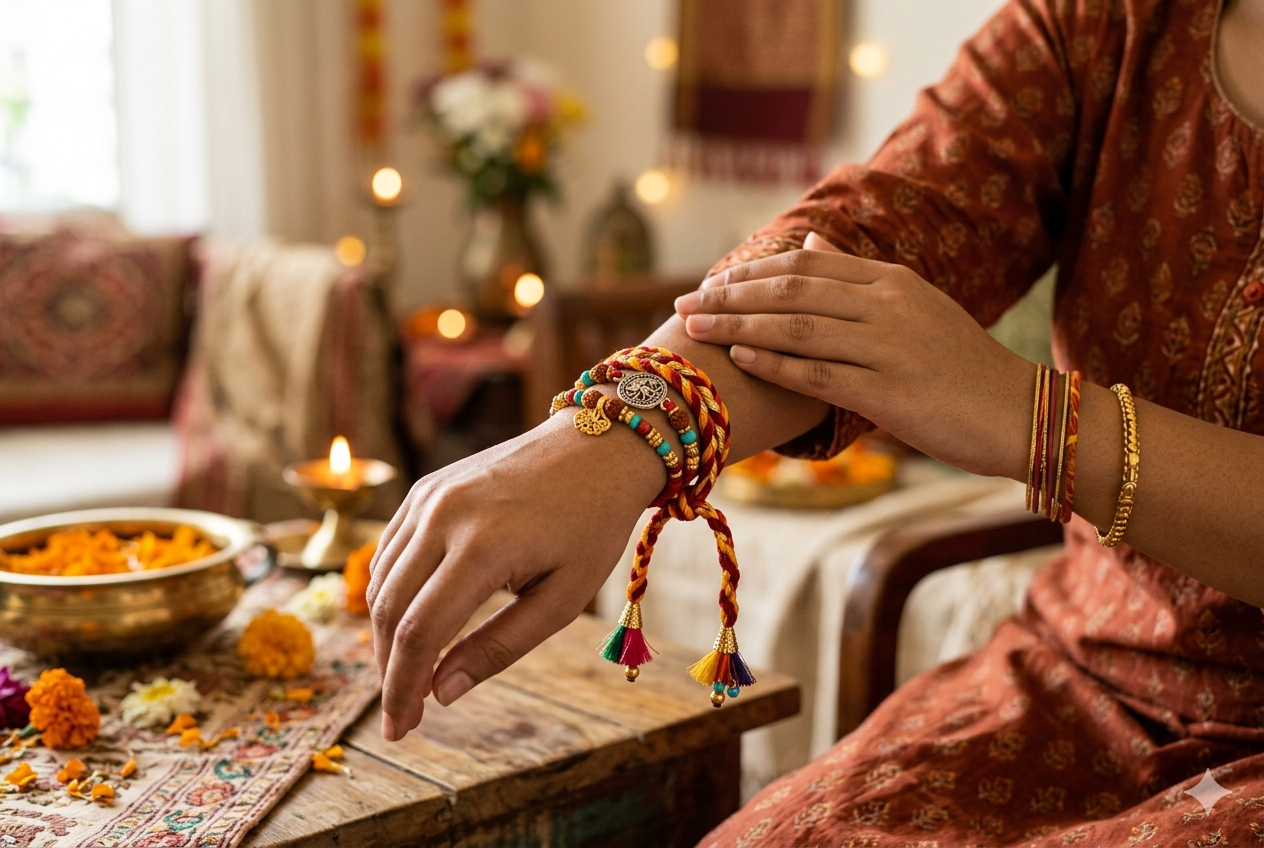
A wrist thread for protection is a thin string, usually made of cotton or silk, tied around the wrist during religious ceremonies or auspicious occasions. Across India, it is known by different names such as kalawa, mauli, raksha sutra, rakhi, or kautuka, but all forms share the same core idea: to create a spiritual barrier around the wearer.
On our website, you can explore all types of spiritual and wellness products in the shop section, where protective threads and related accessories are also available.
Why people wear a red and black thread on wrist
Many devotees wear a red and black thread on wrist because each color carries symbolic meaning. Red stands for energy, vitality, and protection from negative forces, while black is believed to absorb and neutralize negative energies and the evil eye (buri nazar).
This practice is deeply rooted in Hindu culture and is often performed by priests or elders during pujas, havans, or before the start of any new venture. For more information on traditional rituals and spiritual care, you can also read our, which explains how to use such items in everyday life.
Spiritual and health benefits of a protection thread
A wrist thread is not only symbolic but is also associated with certain spiritual and health benefits. According to Ayurvedic and yogic understanding, the wrist is a key nerve center where many energy channels pass through.
Tying a mauli thread or kalawa gently around the pulse point may help:
- stimulate the nervous system and improve blood circulation.
- balance the three doshas (vata, pitta, kapha) and support overall well‑being.
- create a sense of calm and focus, which is helpful during meditation and prayer.
If you are exploring holistic wellness, you may also like our medical equipment and medical‑02 pages, which list tools that complement traditional and modern health practices.
How to choose the right type of wrist thread
Not all wrist threads are the same in terms of material, color, and purpose. Here are common types and their uses:
- Red mauli / kalawa: Used for protection, long life, and spiritual strength; often tied during pujas and festivals.
- Black thread: Primarily chosen for warding off evil eye and negative energies.
- Red‑black combination thread: Combines both protection and energy‑balancing qualities.
When choosing a thread for evil eye protection, look for threads that are clean, made of natural cotton or silk, and preferably tied by a priest or someone with positive intentions. You can contact us if you need help selecting the right spiritual or protective product for your needs.
Where to tie and how long to keep the wrist thread
Traditionally, the wrist thread is tied on the right wrist, which is considered auspicious and dominant in many Hindu rituals. The thread is usually worn until it naturally wears out or falls off, as this is seen as a sign that it has absorbed the negative forces meant for the wearer.
Some people remove it after a specific puja or festival, preferably cutting it rather than pulling it off forcefully. For more guidance on rituals and product usage, you can also refer to our shipping‑returns and terms‑conditions pages, which explain how to receive and use such spiritual items safely.
Wrist thread and its connection to faith and tradition
Beyond physical and energetic benefits, a wrist thread for protection is a visible reminder of faith, commitment, and divine connection. It is often tied before important events such as exams, job interviews, travel, or surgery, symbolizing the hope that the wearer will be guarded by higher forces.
In households that follow Sanatan Dharma, tying a Kautuka thread or mauli has been passed down through generations as a small daily ritual. You can learn more about our company values and spiritual alignment on the, which explains our mission to support holistic and traditional wellness.