What is a Religious Wrist Band and Why Do Devotees Wear One
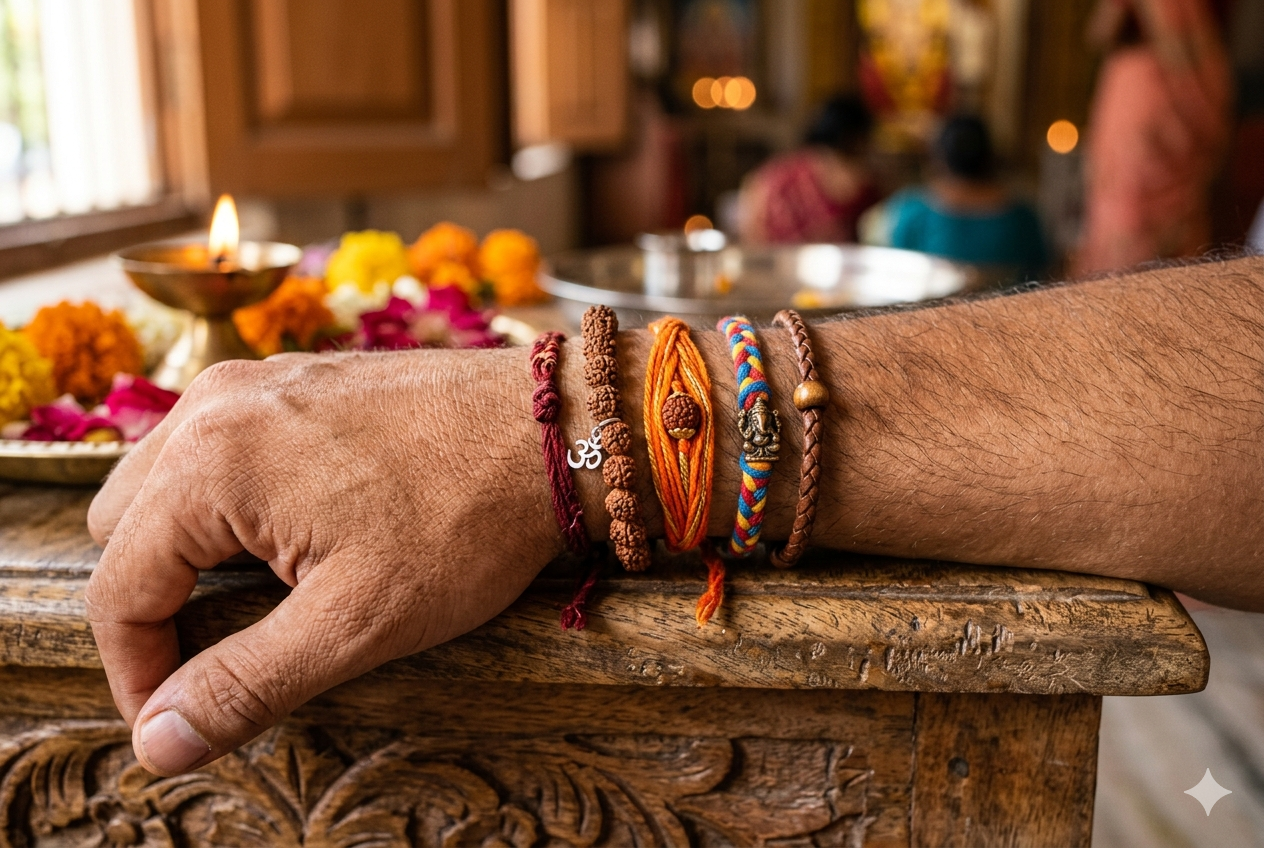
A religious wrist band is a band, bracelet, thread, or cord worn on the wrist that carries spiritual, religious, or protective significance. Across Hinduism, Buddhism, Christianity, Islam, Sikhism, and many other faiths, the wrist is considered a powerful point on the body through which divine energy and blessings can be received and retained.
In Hindu tradition, the religious wrist band is most commonly associated with the Mauli thread, also called the Kalava or Raksha Sutra. This sacred red or red-and-yellow thread is tied by a priest during puja or by a family member during festivals such as Raksha Bandhan. The act of tying the thread is accompanied by a Sanskrit mantra, and the knot itself is considered to bind divine protection to the wearer.
In Buddhist traditions, a wrist band blessed by a monk is believed to carry the energy of the monk’s prayers and meditations, offering the wearer spiritual protection and good fortune. In Christian contexts, wristbands with cross symbols, scripture verses, or saint medallions serve as constant reminders of faith and devotion.
Types of Religious Wrist Bands Available for Devotees
Understanding the different types of religious wrist bands helps you select the one that aligns with your faith, intention, and the occasion on which you plan to wear it. Below are the most significant categories found across religious traditions in India and worldwide.
Mauli Kalava Thread
The traditional red cotton sacred thread tied during Hindu rituals. Worn on the right wrist by men and the left wrist by women, it symbolizes divine protection and blessings from the presiding deity.
Rakhi Wrist Band
Tied during Raksha Bandhan, this ornamental religious wrist band represents the bond between siblings and carries prayers for a brother’s long life and a sister’s protection.
Rudraksha Wrist Band
Made from Rudraksha beads sacred to Lord Shiva, this wrist band is believed to protect the wearer from negative energies while promoting health, mental clarity, and spiritual growth.
Buddhist Blessed Cord
A cord or thread blessed by a Buddhist monk through prayer and chanting. Wearing this wrist band is thought to bring merit, protection, and connection to the Buddha’s teachings.
Tulsi Beads Wrist Band
Made from the wood of the sacred Tulsi plant revered by Vaishnavas, this wrist band is worn as an act of devotion to Lord Vishnu or Lord Krishna and purifies the energy of the wearer.
Devotional Charm Bracelet
A modern form of religious wrist band featuring charms of deities, auspicious symbols like Om, Swastika, or crosses, combined with beads or cord in sacred colors.
Each of these wrist bands serves a distinct spiritual purpose. If you are looking to explore the full range of sacred accessories, you can visit the complete spiritual accessories collection at Damodaram Store, where authentic religious wrist bands and related devotional items are carefully sourced.
Spiritual Significance and Cultural Meaning of the Religious Wrist Band
The wrist has long held a special place in sacred anatomy across many traditions. In Ayurveda and ancient Hindu thought, the wrist contains energy points connected to the heart and the life force, known as prana. Tying a religious wrist band at this point is therefore not arbitrary; it is a precise ritual act intended to channel divine energy directly into the body’s vital system.
“Wearing a sacred wrist band is not a fashion statement. It is a daily renewal of your relationship with the divine.”
During major Hindu festivals and religious milestones, the religious wrist band plays a central role. At ceremonies like the thread ceremony, known as Upanayana, the sacred thread is tied to a young boy’s wrist as part of his initiation into Vedic study. During Navratri, Diwali, and other important observances, priests tie fresh Mauli threads on devotees’ wrists as blessings. The color red in these bands represents protection and the presence of the divine mother, while yellow represents auspiciousness and the energy of Lord Vishnu.
In South India, particularly in Tamil Nadu, Karnataka, and Andhra Pradesh, tying a sacred thread or wrist band during temple visits is a deeply ingrained practice. Devotees who visit major temples such as the Tirupati Balaji shrine receive a sacred thread tied by the temple priests, which they are expected to wear until it falls off naturally, signifying the completion of divine blessing.
The Religious Wrist Band as a Symbol of Spiritual Vows and Commitments
Many devotees tie a religious wrist band at the start of a spiritual vow, known as a Vrat. The wrist band acts as a physical anchor for the vow, reminding the wearer of their commitment throughout the period of observance. Common vows observed with a sacred wrist band include the Monday fast dedicated to Lord Shiva, the Saturday fast for Shani Dev, and the Ekadashi fast observed by Vaishnavas.
In this way, the religious wrist band functions simultaneously as a symbol, a reminder, and a vessel of divine blessing. It connects the individual to a larger spiritual community and to the deity at the center of their devotion.
Devotees who travel frequently or live away from their hometown temples often find the religious wrist band to be a portable form of their faith. It requires no specific location, no infrastructure, and no particular time. Its presence on the wrist is itself a constant act of worship.
For those who are beginning their devotional journey, you can read more about the story and values behind Damodaram Store, a brand rooted in authentic Indian spiritual tradition.
How to Choose the Right Religious Wrist Band for Your Faith and Purpose
Choosing the right religious wrist band requires attention to your faith tradition, the deity you are devoted to, the material you prefer, and the specific occasion or intention behind wearing the band. Here is a structured approach to making the right choice.
Choosing a Religious Wrist Band Based on Your Deity or Tradition
If you are a devotee of Lord Shiva, a Rudraksha wrist band is considered the most spiritually potent choice. Rudraksha beads are directly associated with Lord Shiva and are mentioned extensively in sacred texts such as the Shiva Purana. A 5-mukhi Rudraksha wrist band is considered appropriate for general well-being and is suitable for most devotees regardless of age or gender.
For devotees of Lord Vishnu or Krishna, a Tulsi bead wrist band is the recommended sacred accessory. Tulsi is considered the most sacred plant in Vaishnavism, and wearing Tulsi on the wrist is believed to ensure the wearer’s consciousness remains connected to Vishnu throughout the day.
Devotees of the Divine Mother across her many forms, including Durga, Lakshmi, and Saraswati, most commonly wear red or orange Mauli threads and ornamental wrist bands featuring the Trishul, Lotus, or Swastika symbol.
Choosing Based on the Occasion or Purpose
For festivals and religious ceremonies, ornamental Rakhi-style wrist bands with decorative elements are appropriate. For everyday devotional wear, a simple Mauli thread, Rudraksha band, or Tulsi bead wrist band is preferred, as these are designed to be worn continuously. For gifting during religious occasions, a finely crafted devotional charm bracelet or a set of Rudraksha wrist bands makes a meaningful and auspicious gift.
If you are shopping as a gift for a devotee, the main shop at Damodaram Store carries a curated range of religious wrist bands suitable for gifting during festivals and ceremonies. You can also check the current sale items for discounted religious accessories.
Materials Used in Authentic Religious Wrist Bands
The material of a religious wrist band is not merely an aesthetic consideration. In most faith traditions, specific materials carry specific spiritual properties and are prescribed for specific purposes.
Cotton and Natural Thread in Sacred Wrist Bands
The traditional Mauli Kalava is made from unbleached cotton dyed red and yellow. Cotton is considered a pure, natural material that does not interfere with the flow of prana through the body. The simplicity of cotton also reflects the principle that true devotion does not require elaborate ornamentation.
Rudraksha Beads in Hindu Religious Wrist Bands
Rudraksha seeds, which grow on trees found in the Himalayan regions of Nepal and parts of India, are among the most sacred materials used in Hindu religious wrist bands. Each Rudraksha bead has a number of faces, called Mukhis, ranging from one to twenty-one, and each face type is associated with a specific deity and set of blessings. A genuine Rudraksha wrist band is tested for authenticity by placing the beads in water; genuine beads sink, while hollow or fake beads float.
Tulsi Wood and Crystal in Devotional Wrist Bands
Tulsi wood beads, crystal beads of clear quartz or rose quartz, and sandalwood beads are all used in creating religious wrist bands for different traditions and purposes. Sandalwood, in particular, carries a natural fragrance that is associated with purity and is considered pleasing to the deities, making sandalwood wrist bands a popular choice for temple wear.
Metals: Gold, Silver, and Copper
Gold and silver are considered sacred metals in Hindu, Jain, and Buddhist traditions. A thin gold or silver bangle worn alongside a religious wrist band enhances the spiritual energy of the combination. Copper is specifically associated with the sun and is believed to protect the body from illness and negative influences when worn on the wrist.
Explore More at Damodaram Store
- Best Selling Devotional Items
- Top Rated Religious Accessories
- Featured Sacred Collections
- Full Shop Collection
- Frequently Asked Questions
How to Wear and Care for Your Religious Wrist Band
Wearing a religious wrist band correctly and maintaining it with respect extends both its physical life and its spiritual potency. The following guidance applies across most traditions.
Which Wrist to Wear a Religious Wrist Band On
In Hindu tradition, the Mauli thread is tied on the right wrist of men and unmarried women, and on the left wrist of married women. The right side of the body is generally considered the side of giving and action, while the left is the side of receiving. Buddhist monks typically tie a blessed cord on the right wrist of both men and women, though customs vary by country and tradition.
When to Remove and Replace a Religious Wrist Band
Many traditional sacred wrist bands such as the Mauli thread are worn until they fall off naturally, which is considered a sign that the blessings contained within the thread have been fully absorbed. It is generally not advisable to deliberately remove or cut a sacred wrist band, as this may be seen as rejecting the divine protection it carries.
However, for practical reasons, some people choose to replace their wrist band at natural milestones such as the completion of a Vrat, the beginning of a new month, or on the occasion of a major festival. Replacing a worn or frayed religious wrist band with a fresh one is considered auspicious rather than disrespectful.
Hygiene and Maintenance of Sacred Wrist Bands
Cotton and thread wrist bands should not be soaked in soap or harsh chemicals, as this can damage the dye and the fiber. During bathing, it is acceptable to get a Mauli thread wet with plain water. Rudraksha and wood bead wrist bands benefit from occasional oiling with pure sesame oil or sandalwood oil to prevent the beads from cracking. Metal components should be gently cleaned with a soft cloth.
Where to Buy Authentic Religious Wrist Bands Online
The growing availability of religious wrist bands online has made it easier than ever for devotees to access authentic sacred accessories regardless of their location. However, quality and authenticity vary significantly across sellers, making it important to purchase from a trusted source that understands the spiritual significance of what it sells.
Damodaram Store is a dedicated Indian spiritual accessories brand offering a range of devotional products including religious wrist bands. The store is committed to sourcing authentic materials and maintaining standards that respect the sacred purpose of each product.
For bulk requirements, for example if you are organizing a religious ceremony, temple event, or community puja and need a large quantity of sacred wrist bands, you can use the bulk order form available on the store. For any specific queries about products, the contact page allows you to reach the team directly.
If you need help finding items that are currently available, the shop page gives you access to the full product catalogue, and the best-selling section highlights the most popular religious wrist bands and devotional accessories chosen by other devotees.
Browse the complete collection of authentic religious wrist bands and devotional accessoriesExplore the Shop at Damodaram Store
Frequently Asked Questions About Religious Wrist Bands
What is the difference between a Mauli thread and a Rakhi?
A Mauli thread, also called Kalava, is a sacred red or yellow-red cotton thread tied by a priest or elder during any Hindu puja or religious ritual to invoke divine protection. A Rakhi is a specific ornamental religious wrist band tied by a sister on her brother’s right wrist during the festival of Raksha Bandhan, symbolizing a prayer for his long life and her protection. While both are religious wrist bands, they differ in their occasion, appearance, and the relationship they represent. You can explore devotional wrist bands for all occasions at Damodaram Store.
Can a non-Hindu wear a religious wrist band?
In general, most Hindu religious traditions welcome sincere devotion from people of any background. If you are drawn to wearing a Rudraksha wrist band or a Mauli thread out of genuine spiritual interest and respect, it is considered acceptable. That said, it is important to understand the meaning behind the wrist band you choose to wear, rather than treating it as purely a fashion accessory. If you have specific questions about what is appropriate for your situation, the frequently asked questions page at Damodaram Store may be helpful.
How long should I wear a religious wrist band?
The duration depends on your tradition and the specific purpose of the wrist band. A Mauli thread tied during a puja is traditionally worn until it falls off naturally. A vow-related wrist band is worn for the duration of the Vrat. A Rudraksha or Tulsi wrist band can be worn indefinitely as a constant devotional accessory. Consult a trusted priest or religious guide if you are unsure about the appropriate duration for a specific wrist band you have received.
Are there religious wrist bands suitable for children?
Yes. Simple cotton thread wrist bands, small Tulsi bead bracelets, and ornamental Rakhi bands are all commonly given to children during religious occasions. For young children, avoid wrist bands with small loose beads that could present a choking hazard. The Damodaram Store shop offers options suitable for various age groups.
What is the return and refund policy for religious wrist bands purchased online?
Damodaram Store maintains a clear and fair policy for all purchases. For detailed information on returns and refunds for religious accessories, please refer to the return and refund policy page. For shipping-related information, the shipping policy page provides all relevant details.
This guide is published on the Damodaram Store blog. For more information about who we are and our commitment to authentic spiritual accessories, visit our about us page. If you have specific questions, our team is ready to assist through the contact page. For orders in bulk quantities for religious events and ceremonies, use the bulk order form.