
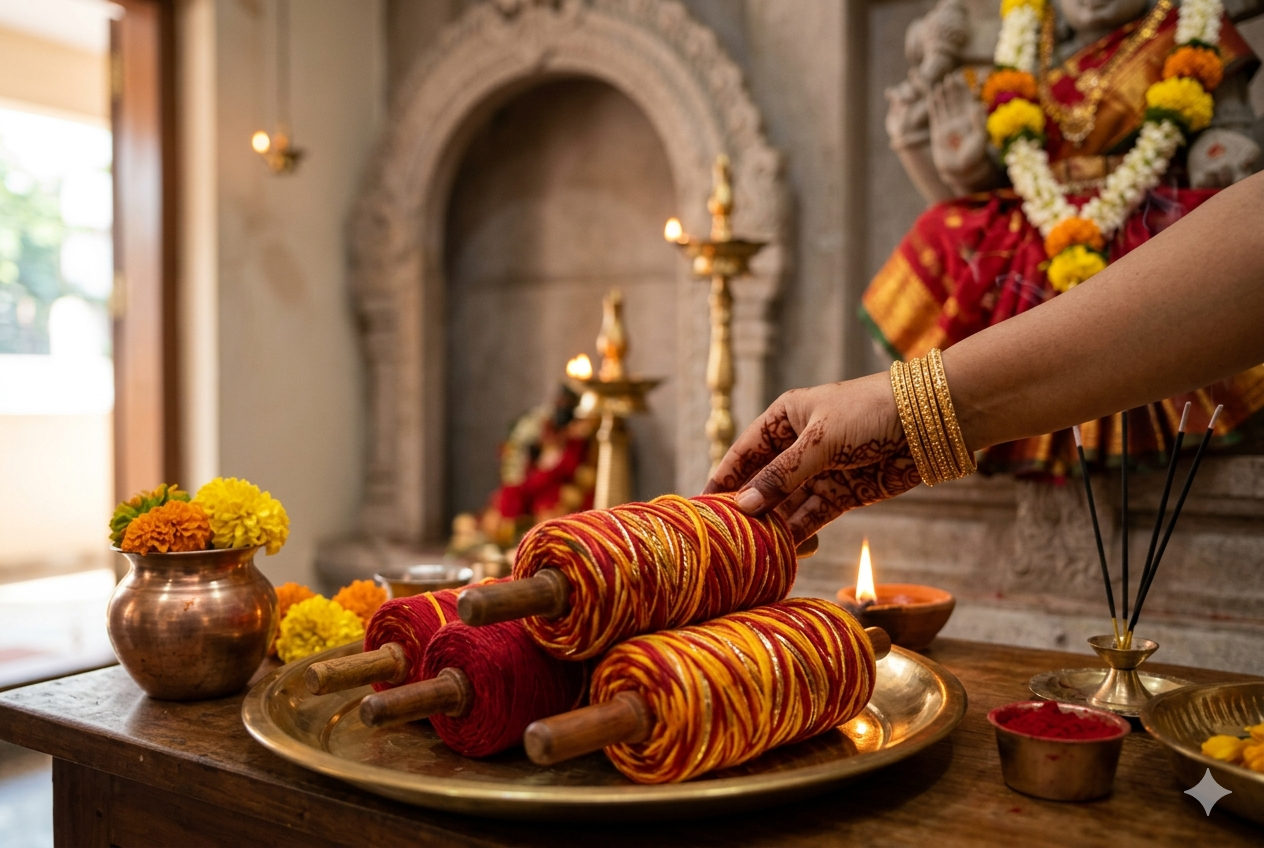
The sacred thread for mandir, known as Yajnopavita or Janeu, holds deep spiritual importance in Hindu temple worship. It symbolizes purity, knowledge, and devotion during rituals.
History of Sacred Thread for Mandir
The sacred thread for mandir originates from ancient Vedic traditions where it marked initiation into spiritual learning. Brahmin boys receive it during Upanayana ceremony between ages 7 and 16, signifying rebirth into Vedic study. Families across India maintain this practice with regional variations like Poonal in Tamil traditions.
In temples, priests wear the sacred thread for mandir over the left shoulder to perform pujas and homas. Historical texts describe its three strands representing debts to gods, sages, and ancestors. Communities preserve these customs through generations for temple sanctity.
Spiritual Meaning of Sacred Thread for Mandir
Each strand of the sacred thread for mandir embodies core Hindu principles of purity in thought, word, and deed. It reminds wearers of obligations to deities Brahma, Vishnu, and Shiva or goddesses Saraswati, Lakshmi, and Parvati. The knot, called Brahmagranthi, signifies unity of cosmic forces.
Wearing the sacred thread for mandir during temple rituals enhances mantra potency and protects from negative energies. Devotees believe it fosters discipline and connects one to divine wisdom. Scriptures outline rules like daily renewal and proper wearing position across the torso.
Types of Sacred Thread for Mandir Rituals
Sacred threads for mandir come in cotton, silk, or wool versions suited to different castes and regions. Smarta sets feature three strands of nine threads each for Brahmins, while simpler single sets suit household use. White color dominates to represent purity in temple settings.
Some sacred threads for mandir include energized versions with mantras for enhanced spiritual power. Length measures from shoulder to waist, typically 96 inches for adults. Variations exist for daily wear versus special shop ceremonies.
How to Use Sacred Thread for Mandir Worship
Position the sacred thread for mandir over the left shoulder under the right arm before entering the temple sanctum. Priests chant purification mantras while wearing it during aarti and abhishekam. Devotees replace it annually on specific tithis for renewed blessings.
For home mandir setups, tie the sacred thread for mandir around puja items like kalasha during festivals. Avoid touching it with impure hands and perform sankalpa before rituals. Check our shipping and returns policy for authentic purchases.
Benefits of Wearing Sacred Thread for Mandir
The sacred thread for mandir amplifies positive energies and sharpens focus during meditation. It wards off malefic influences and supports Vedic chanting efficacy. Long-term wearers report heightened intuition and family prosperity.
Regular use of sacred thread for mandir in daily temple visits strengthens devotion and ritual discipline. It qualifies one for advanced sadhanas and guru diksha. Explore bulk options via our contact form.
Caring for Your Sacred Thread for Mandir
Store the sacred thread for mandir in a clean cloth pouch away from pollutants when not in use. Renew it if threads fray or discolor to maintain sanctity. Gentle hand wash preserves its energy without detergents.