
Choosing the best crochet yarn can feel overwhelming when you are standing in front of a wall of colors, textures, and fiber types. Every yarn behaves differently on the hook, every fiber has different care requirements, and every project demands its own specific qualities. Getting the match right between yarn and project is what separates a beautiful finished piece from a frustrating work in progress.
This guide covers everything you need to know to choose the best crochet yarn for your next project, from understanding fiber types and yarn weights to finding a reliable source like Damodaram Store where quality is consistent and selection is wide.
Why Yarn Selection Matters More Than Most Beginners Realize
Many new crocheters underestimate the impact of yarn choice. They pick whatever is on sale, or whatever color they love, and then wonder why their blanket is too stiff, why their amigurumi does not hold its shape, or why their baby bootie feels scratchy against soft skin.
Experienced crocheters know that yarn is half the pattern. The fiber content, the twist, the ply, and the weight all interact with your hook and your hand tension to produce the final fabric. Choosing the right yarn from the beginning saves hours of ripping out stitches and starting over.
Understanding Yarn Fiber Types for Crochet
The fiber content of a yarn is the single most important factor in how a finished piece will look, feel, and perform over time.
Cotton Yarn for Crochet
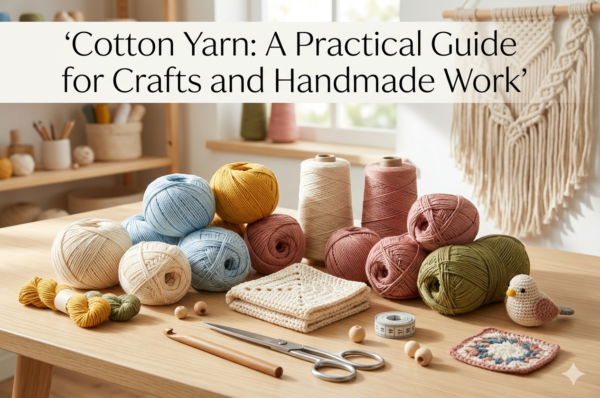
Cotton is the gold standard for many crochet projects, particularly those intended for warm climates, frequent washing, or contact with sensitive skin. It is breathable, durable, and holds stitch definition exceptionally well, meaning your intricate patterns will show clearly in the finished fabric.
The best cotton crochet yarn is mercerized, a process that increases sheen, strength, and dye absorption. Mercerized cotton yarns produce crisp, polished results in everything from dishcloths to fine lace collars.
The main limitation of cotton is its lack of elasticity. It does not have the same stretch and recovery as wool, which can make tension management a little more challenging for beginners. However, its predictability and washability make it a staple at Damodaram Store, where it is one of our consistently top-selling fiber categories.
Acrylic Yarn for Crochet
Acrylic yarn has come a long way from the scratchy, plastic-feeling skeins of decades past. Modern premium acrylic is soft, smooth, and available in an enormous range of colors. It is machine washable, colorfast, and significantly more affordable than natural fibers.
For beginners, acrylic is often recommended because it is forgiving, easy to find, and inexpensive enough that mistakes do not feel costly. For production crocheters making items for sale, acrylic offers consistent color across large dye lots and predictable drape.
The limitation of acrylic is that it does not breathe like natural fibers, and lower-quality versions can pill over time. Choosing a premium acrylic from a reputable supplier makes a significant difference in the final result.
Wool Yarn for Crochet
Wool is beloved for its warmth, elasticity, and natural ability to felt and stick to itself slightly, which actually helps stitches hold together more neatly in some construction methods. The best wool crochet yarn has a smooth, consistent spin and enough twist to resist pilling.
Superwash wool has been treated to allow machine washing, making it more practical for garments and children’s items. Non-superwash wool requires hand washing or dry cleaning, which is fine for decorative items and home goods but may limit its appeal for wearable pieces.
If you work with crochet for wearable goods or cozy home textiles, exploring wool options in our hand knitting yarn section at Damodaram Store can open up a range of possibilities that pure cotton or acrylic cannot match.
Bamboo and Blended Yarns
Bamboo yarn is silky, breathable, and naturally antibacterial, making it an excellent choice for baby items and garments worn close to the skin. It drapes beautifully and produces a luxurious sheen in finished pieces.
Blended yarns that combine cotton with bamboo, acrylic with wool, or linen with cotton can offer the best qualities of multiple fibers in a single strand. These blends are worth exploring when you want to balance performance, softness, and cost.
Yarn Weight: Matching Thickness to Your Project
Yarn weight refers to the thickness of the strand, and it has a direct impact on both the appearance of your finished piece and the speed at which it works up. The Craft Yarn Council standardizes weights from 0 (lace) through 7 (jumbo).
Weight 0: Lace Used for extremely delicate work. Often interchangeable with the finest crochet thread wholesale options. Requires very small hooks and experienced hands.
Weight 1: Super Fine Good for socks, fine baby items, and detailed amigurumi. Works up slowly but produces beautiful, detailed results.
Weight 2: Fine A versatile light weight for garments, accessories, and delicate home goods. Popular for shawls and lightweight summer tops.
Weight 3: Light Also called DK weight, this is a workhorse yarn that works up quickly and is light enough for garments in most climates. Ideal for baby blankets and children’s clothing.
Weight 4: Medium The most popular yarn weight in the world, often called worsted weight. Suitable for blankets, hats, scarves, bags, and most beginner projects. This is the weight most widely stocked at Damodaram Store.
Weight 5: Bulky Works up extremely fast. Great for chunky home decor, thick blankets, and winter accessories. Less detail but maximum coziness.
Weight 6 and 7: Super Bulky and Jumbo Used for arm knitting, extreme crochet projects, and large-scale decorative pieces. Very limited detail but dramatic visual impact.
Color Considerations When Choosing Crochet Yarn
Color is often the first thing that attracts a crafter to a particular yarn, and it absolutely matters, but there are practical considerations beyond pure aesthetics.
Solid Colors: Solid, undyed, or tone-on-tone yarns are the best choice when you want your stitch work to show clearly. Cables, shells, and textural stitches disappear in variegated or busy color schemes.
Variegated and Self-Striping Yarns: These yarns change color along the strand, creating automatic color effects in the finished fabric. They work best in simple stitches that let the color shifts do the visual work.
Gradient Yarns: Gradient yarns shift slowly from one color to another, creating a soft ombre effect. They are currently one of the most popular choices for shawls, blankets, and statement accessories.
Dye Lot Consistency: When buying multiple skeins for a large project, always purchase from the same dye lot. Even slight differences between lots can create visible stripes in your finished work. Buying bulk crochet supplies from a wholesale supplier helps guarantee dye lot consistency across large orders.
Best Crochet Yarn for Specific Projects
Different projects demand different yarn qualities. Here is a quick reference guide.
Best Yarn for Crochet Blankets
For blankets, you want a yarn that is soft against skin, machine washable, and available in large quantities at consistent dye lots. Medium weight acrylic or cotton-acrylic blends are the most practical choice. Look for yarn with good stitch definition so your pattern shows clearly in the finished blanket.
Best Yarn for Crochet Amigurumi
Amigurumi requires a yarn that holds its shape well and does not allow stuffing to show through the stitches. Tightly plied cotton or cotton-blend yarn in a lighter weight gives you the best stitch definition and coverage. Avoid fluffy or textured yarns for amigurumi as they obscure the stitch work.
Best Yarn for Crochet Garments
For wearable garments, prioritize drape, softness, and washability. Bamboo blends, mercerized cotton, and superwash wool all perform well in garments. Check the care instructions carefully and choose a fiber that suits the intended wearer’s lifestyle.
Best Yarn for Crochet Bags and Accessories
Bags need a yarn that is durable and holds its shape under the weight of contents. Cotton, linen, and tightly twisted synthetic yarns all work well. For structured bags, consider a cotton cord or macrame-style yarn that produces a firm, stable fabric.
Best Yarn for Baby Crochet Projects
Baby items require softness, washability, and absence of scratchy fibers. Certified organic cotton, bamboo blends, and baby-specific acrylic yarns are the safest choices. Always check for certifications that confirm the yarn is free from harmful chemicals and dyes.
How to Test Crochet Yarn Before Committing to a Large Order
If you are a production crafter or retail buyer, testing yarn before placing a large wholesale order is essential. Here is a simple testing process.
Order a single skein or small quantity first and work a swatch in your planned stitch pattern. Wash the swatch according to the care instructions and measure it before and after washing to check for shrinkage. Assess how the fabric feels, how clearly the stitches show, and how the yarn behaves on the hook.
Only after completing this process should you commit to a large order. At Damodaram Store, we encourage this approach and can provide samples for wholesale buyers evaluating our yarn range.
Storing Crochet Yarn Properly to Protect Your Investment
Proper storage protects your yarn investment and keeps your materials ready to use when you need them.
Keep yarn in a cool, dry location away from direct sunlight. UV exposure fades colors over time, particularly with natural fiber yarns. Store yarn in sealed containers or zippered bags to protect it from moths, which are attracted to natural fibers like wool and alpaca.
Avoid storing yarn in damp areas, which can cause mildew in natural fibers. If you notice any musty smell when opening stored yarn, air it out thoroughly before using it in a project.
For large wholesale quantities, consider vacuum-sealed storage bags that compress the yarn for efficient space use while protecting it from moisture and pests.
Why Damodaram Store Is a Trusted Source for the Best Crochet Yarn in India
At Damodaram Store, we have built our product range around the needs of serious crochet crafters and textile businesses. Our yarn selection covers every major fiber type, weight category, and color palette, with options for both retail buyers and wholesale clients.
We source from manufacturers who maintain quality standards across production batches, meaning the yarn you receive today will match the yarn you ordered last month. For businesses that depend on material consistency, this reliability is worth more than the lowest unit price.
Our team understands the crochet and knitting fiber market deeply. Whether you are looking for the softest cotton for baby items, the most vibrant acrylic for a colorful blanket collection, or specialty fibers for a premium product line, we can help you find the right match.
We also carry complementary products including knitting thread and a full range of wholesale fiber options, making us a one-stop supplier for businesses that work across multiple craft disciplines.
Final Thoughts on Choosing the Best Crochet Yarn
The best crochet yarn is not a universal product. It is the yarn that is perfectly matched to your specific project, your preferred fiber, your budget, and your customer’s expectations. Understanding the interplay between fiber type, weight, color, and construction gives you the tools to make that match confidently every time.
Explore the full range of yarn options at Damodaram Store and discover why crafters and businesses across India trust us for quality, consistency, and expert product support.