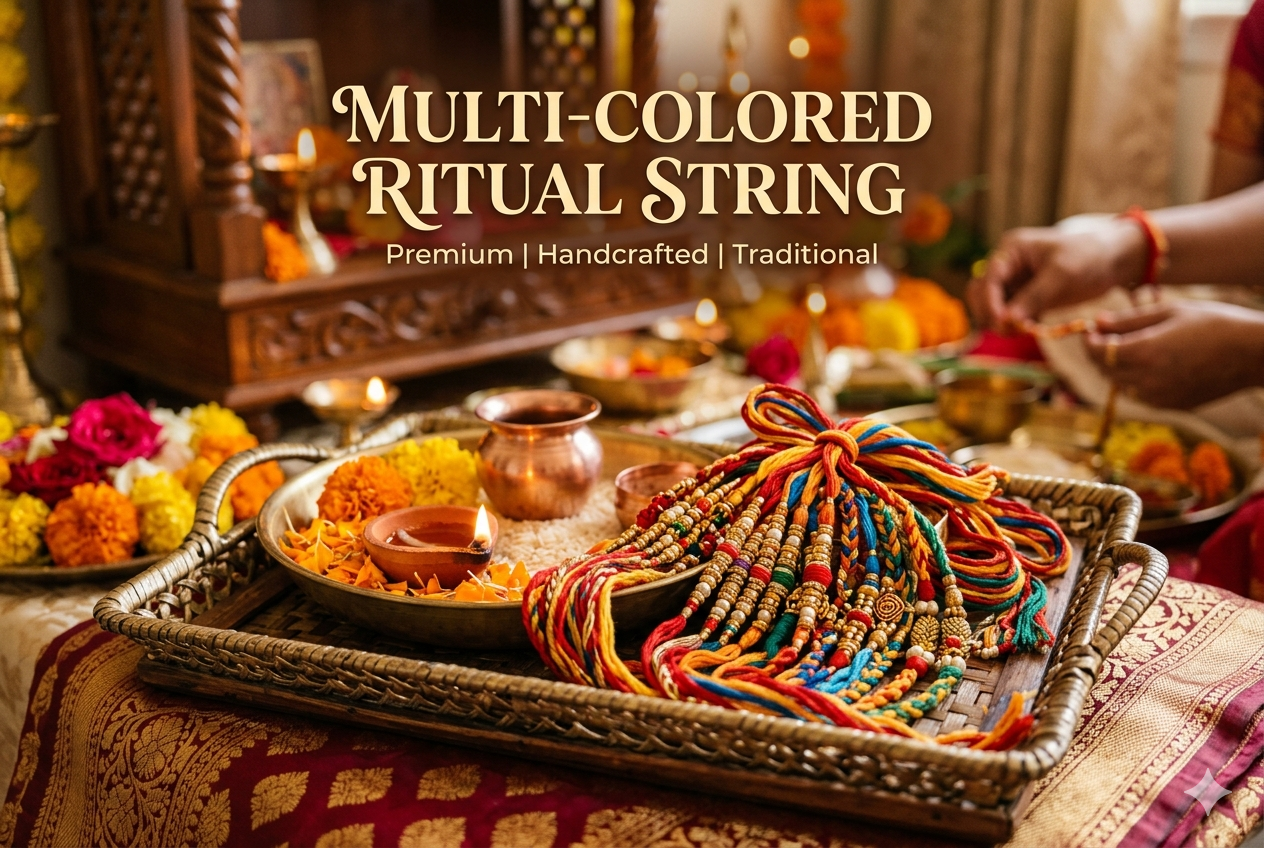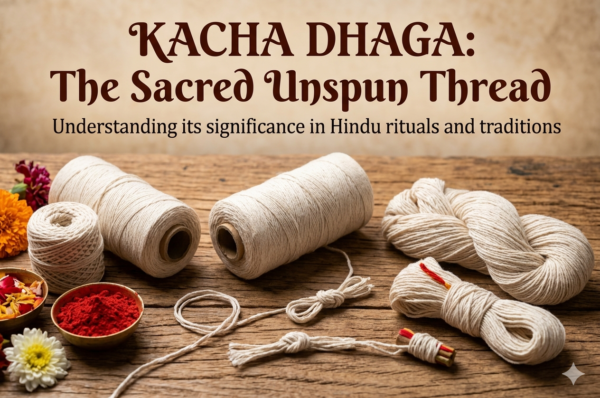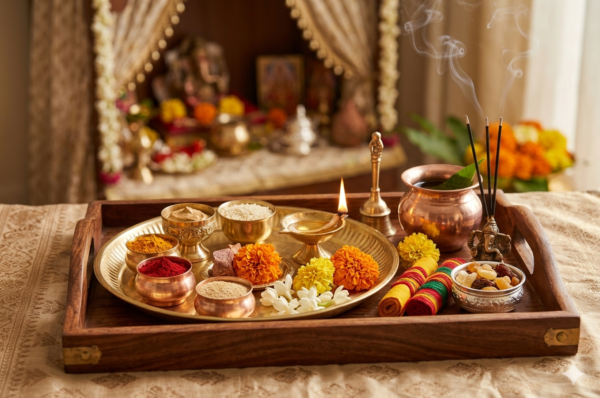

The tradition of using a sacred thread in a Hindu wedding appears in various forms, most notably in the Kankana Puja and the Mangalaya Puja. During the Kankana Puja, a woolen thread is tied to the hands of the bride and groom, which is believed to protect the couple from negative influences as they prepare for their union. This thread serves as a constant reminder of their mutual obligation to protect and support each other through the challenges of life. For more details on our products that celebrate these traditions, visit our shop.
Significance of the Sacred Yellow Thread
The Mangalaya Puja, often referred to as the Yellow Thread Puja, is essential to the sanctity of the wedding ceremony. The thread is dyed with turmeric and marked with symbolic beads, representing the bond between the husband and wife. By allowing guests to touch the thread and offer their blessings, the couple incorporates the community’s support into their marriage, formalizing their commitment in the presence of witnesses. You can find resources regarding our our services to better understand how we support such meaningful cultural celebrations.
The Hastamilap Ritual and Unity
During the Hastamilap ceremony, the priest ties the hands of the bride and groom together with a sacred thread while chanting mantras. This act signifies the eternal bond and shared destiny of the couple, physically and spiritually anchoring them to their vows. This moment of unity is followed by the Saptapadi or Seven Steps, which solidify the couple’s pledges to the universe and their future life together. If you have questions about how these customs influence our products, please check our FAQ or reach out to us via our contact us page.
Symbolism of the Wedding Thread
The thread represents much more than a simple accessory; it embodies the strength and endurance required in a marriage. Whether it is the mangalsutra or the hand-binding thread, these items function as lifelong signs of the couple’s status and their dedication to one another. By honoring these ancient practices, couples celebrate their heritage and strengthen the foundation of their relationship.